Ingredients
Method
Step 1: Cook the Pasta
- Begin by boiling a pot of salted water. Add the penne pasta and cook according to the package instructions until al dente. This usually takes about 11 minutes but keep an eye on it. Drain the pasta and set aside, reserving a cup of pasta water.
Step 2: Sauté the Aromatics
- In a large skillet, drizzle in two tablespoons of extra virgin olive oil over medium heat. Add the sliced garlic, and let it sizzle for a minute until fragrant. Avoid burning it; we want a gentle sauté, not a charred mess.
Step 3: Add the Vegetables
- Next, toss in the red onion, and cook until it softens, about 3 minutes. Follow with the asparagus, zucchini, yellow squash, and cherry tomatoes. season with salt and ground black pepper. Stir frequently, letting the colors and flavors mingle and dance in the pan. This should take about 5 minutes.
Step 4: Combine Everything
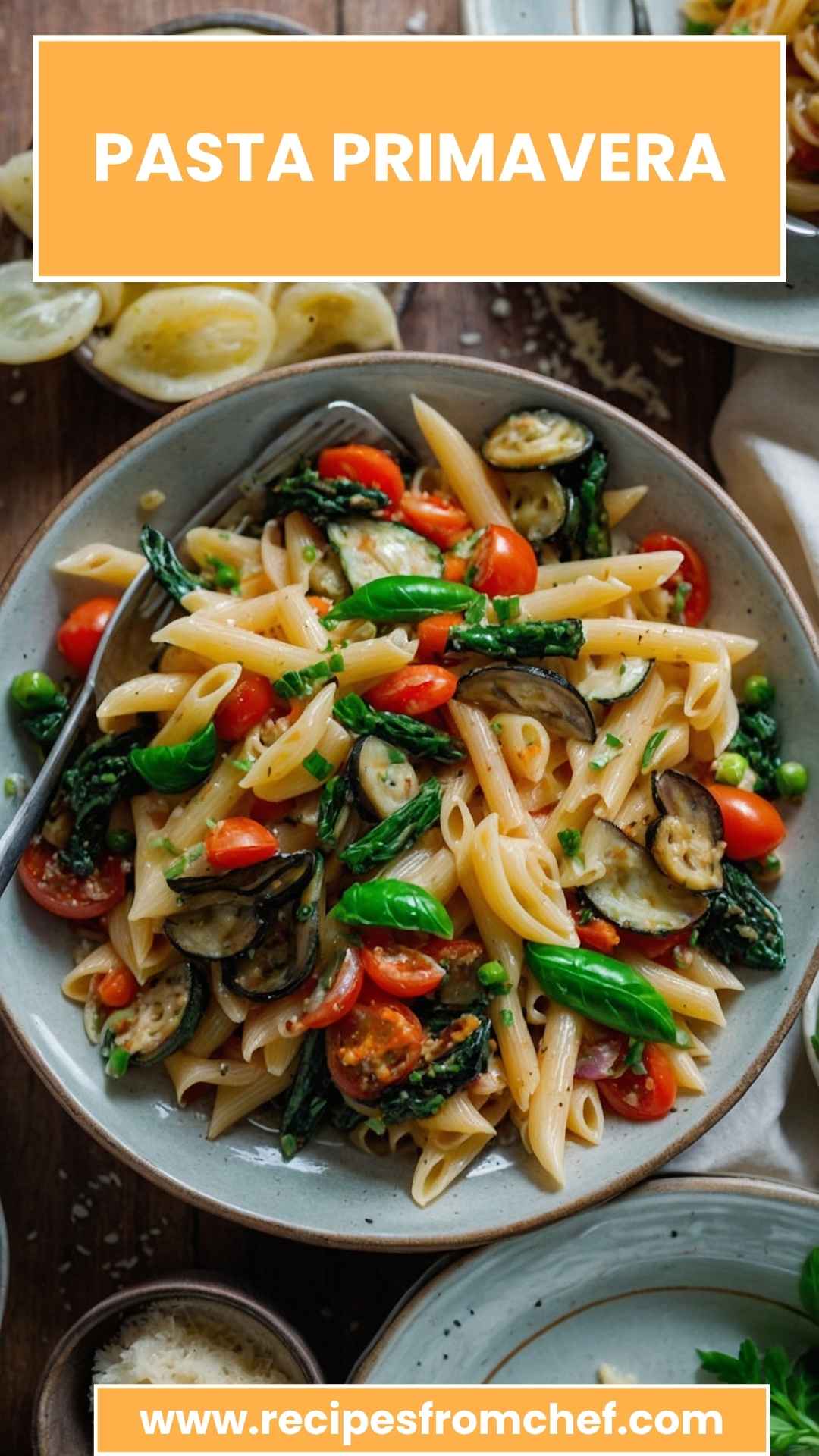
- Once your veggies have softened, add the green peas and cooked pasta to the skillet. Gently toss everything together. If it looks too dry, add a splash of that reserved pasta water to create a nice sauce that clings to the noodles.
Step 5: Flavor It
- Remove the skillet from heat. Stir in the lemon juice, tarragon, lemon zest, and chili flakes. Toss it all together. This brings a burst of freshness that is signature to primavera.
Step 6: Plate and Garnish
- Finally, serve the pasta primavera hot. Top with freshly grated Pecorino Romano and more basil for a striking presentation. Don’t forget a drizzle of olive oil—because you can never have too much good oil, right?
Notes
- Pick Fresh Ingredients: Fresh, seasonal produce will make a significant difference in taste. Choose vibrant vegetables for the best flavors.
- Don’t Overcook: Keep the vegetables slightly crunchy for the best textures. Overcooked veggies can become mushy.
- Experiment with Herbs: While tarragon is fantastic, feel free to substitute with parsley or oregano for different flavor profiles.
- Make It Ahead: This dish holds up well in the fridge, making it a great option for meal prep.
- Adjust Spice Levels: If you prefer a milder dish, feel free to cut back on the chili flakes or leave them out entirely.