

Ingredients
Method
Step 1: Begin Your Lentils With Purpose
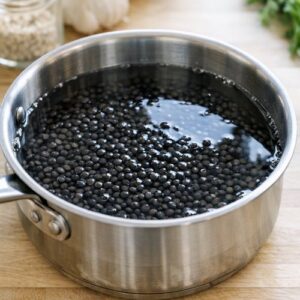
- Place your black lentils in a small pot and cover them completely with water, at least an inch above the lentils. This ensures even cooking and prevents any from staying too firm. Add a generous teaspoon of kosher salt to the water—this seasons the lentils from the inside and also helps them maintain their shape (salt actually firms up legumes rather than softening them, contrary to old cooking myths). Bring everything to a simmer over medium-high heat. Once you see that gentle rolling bubble, reduce the heat to maintain a quiet simmer. Don't let it boil aggressively—that's how lentils break apart. Set a timer for 23-25 minutes and let them cook undisturbed. You'll know they're done when they're tender but still hold their shape and have a slight firmness when you bite into one. Taste one before draining—this is your quality check.
Step 2: Create Your Caramelized Onion Foundation
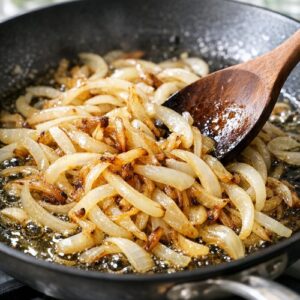
- While your lentils are simmering, it's time to begin the onion magic. In a large skillet, heat your extra-virgin olive oil over high heat until it shimmers. Add your thinly sliced onion and a small pinch of salt, then immediately cover the pan and reduce the heat to low. This is the technique that changes everything. What you're doing here is creating a controlled environment where the onions steam slightly in their own moisture before they caramelize. This prevents them from drying out and ensures they turn creamy-soft and deeply sweet rather than crispy and charred. I typically let them cook undisturbed for the entire time the lentils are cooking—about 23-25 minutes total. Every 5 minutes or so, lift the lid and check on them, allowing any condensation on the lid to drip back into the pan. You want them to be completely soft and golden.
Step 3: Create the Balsamic Reduction
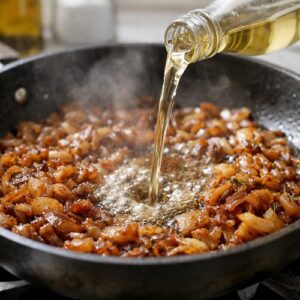
- Once your lentils are perfectly cooked and drained, remove the lid from your onion pan and turn the heat up to medium. Pour in your white balsamic vinegar—this is the moment where your dish transforms. Let the vinegar reduce for about 2-3 minutes, stirring occasionally, until it becomes noticeably thicker and slightly syrupy. You'll see the color deepen and the aroma shift from sharp vinegar to something more mellow and caramelized. This reduction is crucial. It concentrates the flavor so you're not left with a vinegary dish—instead, you have this sophisticated sweet-and-sour complexity that makes people pause and ask what's in this.
Step 4: Bring Everything Together
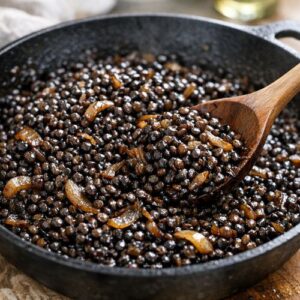
- Add your warm, drained lentils to the onion pan with the balsamic reduction. Stir gently to combine, letting the lentils absorb some of that glossy, reduced vinegar. This is when the dish comes alive visually—the deep charcoal lentils against the golden onions. Now add your baby spinach along with just a tiny pinch of salt. Turn off the heat and leave the spinach alone for a minute or two—the residual heat will wilt it gently. Then use tongs or a large spoon to incorporate the leaves throughout. You want the spinach distributed evenly, adding color and nutrition without overpowering the other flavors. Taste your creation. This is your moment to adjust. Does it need more brightness? Add another small splash of balsamic. Does it need more savory depth? A few more grains of salt will help. Trust your palate.
Step 5: Choose Your Cheese and Plate With Intention
- This is where the dish becomes truly personal. You have options, and each creates a slightly different experience. If using burrata: Break the ball apart gently with your fingers and drop creamy spoonfuls directly over the warm lentil mixture on each plate. The warm lentils will slightly soften the cheese edges, creating this beautiful interplay of temperatures. If using labneh: Smear a generous amount across the center of each plate, then spoon the warm lentil mixture on top. The tangy creaminess grounds the earthy lentils beautifully. If making the yogurt cream sauce: In a small bowl, stir together your Greek yogurt, fresh lemon juice, and salt until smooth and pourable. Drizzle this across your serving plate before topping with the lentil mixture. It's the most economical option and adds a bright, acidic note. Finish everything with a whisper of flaky sea salt. This adds textural contrast and a small jolt of brightness that makes the entire dish sing.

Notes
- Overcooking the lentils - This is the most common mistake. Black lentils can go from perfect to mushy very quickly. Start checking at 20 minutes and taste frequently. You want them tender but with a slight firmness when you bite. They'll continue cooking slightly from residual heat, so it's better to slightly undercook than overcook.
- Rushing the onions - Don't skip the covered cooking phase or increase the heat to speed things up. That slow, covered cooking is what creates the deep sweetness. High heat at this stage creates harsh, burnt flavors. Trust the process. Your patience becomes flavor.
- Adding the vinegar to cold onions - The reduction only works properly when the pan is hot. Make sure your onions are fully cooked and golden before you add the balsamic and increase the heat. This ensures proper caramelization of the vinegar.
- Forgetting to taste and adjust - Every stove is different, every brand of vinegar has slightly different acidity. Taste your finished dish before plating. That five seconds of tasting and adjusting is what separates "pretty good" from "why does this taste so sophisticated?"