Black Lentil Recipe
 Rosa Crumley
July 9, 2026
Rosa Crumley
July 9, 2026
This post contains affiliate links. As an Amazon Associate I earn from qualifying purchases.
I can still smell my grandmother’s kitchen on those quiet Sunday afternoons—the deep, earthy aroma of simmering lentils mingling with caramelizing onions and something bright and tangy in the air. She’d invite neighbors over without fanfare, never fussing, never stressed. She’d simply let the food speak for itself. That’s exactly what happens when you make this black lentil recipe. It’s the kind of dish that makes you look like you’ve spent hours in the kitchen when, truly, you’re done in under thirty minutes. The warm earthiness of properly cooked lentils, the sweet-and-sour complexity of balsamic-kissed onions, and the silky richness of creamy cheese create something that feels both comforting and sophisticated. This is the recipe I reach for when I want to impress without stress—whether that’s a casual Tuesday dinner or a gathered-around-the-table kind of occasion. Like my grandmother’s approach, it proves that elegant cooking doesn’t require complicated techniques, just quality ingredients treated with intention. Let me walk you through this one.
Black Lentil Recipe That Will Steal the Show at Your Next Dinner Party
The first time I served this dish to friends, I was nervous. I’d just moved to Pittsburgh, and I wanted to prove to myself that I could create something meaningful in my own kitchen, not just in my grandmother’s. I prepared everything methodically—the lentils simmering gently, the onions slowly surrendering to heat and time in their covered skillet, waiting for that moment when I’d add the balsamic vinegar and watch it reduce into something almost syrupy and dark.
When I brought the plates to the table, something unexpected happened. Nobody rushed through the meal. Nobody looked at their phones. Instead, there was this quiet moment of recognition—that pause when people understand they’re eating something real, something made with care. One friend asked for the recipe before dessert. Another came back the following week asking if I could teach her how to make it. That’s when I realized: this dish has a quiet power.
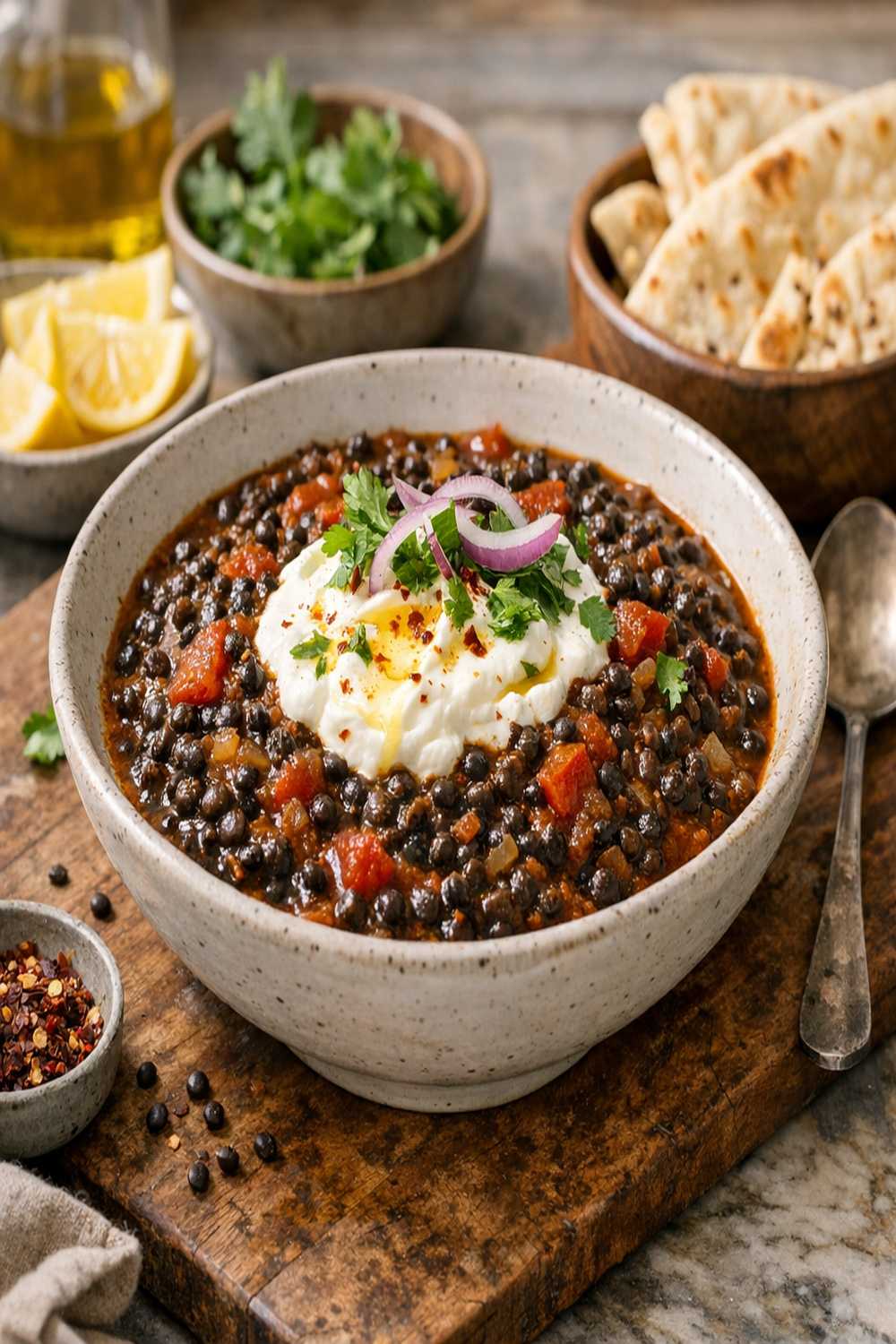
When to Make Black Lentil Recipe
This is a recipe for specific moments—the ones where you want to feel accomplished and elegant without the stress. Let me paint some scenarios where this truly shines:
- Intimate dinner parties – When you’re inviting people you genuinely want to impress, this dish says “I cared enough to cook something thoughtful” without looking overwrought. It’s sophisticated enough for your boss, casual enough for your best friends.
- Early autumn evenings – There’s something about the earthiness of lentils that feels right as the weather shifts. Serve it while there’s still warmth in the day but you’re craving something grounding and seasonal.
- Meal prep for the week ahead – Make a larger batch on Sunday afternoon. This stores beautifully, reheats gently, and becomes your secret weapon for Wednesday nights when you’re exhausted but want something nourishing.
- When you’re exploring vegetarian entertaining – This isn’t a “meatless alternative” that apologizes for itself. It’s a complete, protein-rich, genuinely delicious main course that happens to be plant-forward.
- Date night at home – There’s something romantic about plating this carefully, choosing which creamy cheese to use, watching your partner’s face when they taste it.
What Makes This Black Lentil Recipe Special
Most lentil dishes live in the realm of weeknight comfort food—and there’s nothing wrong with that. But this one transcends that category. What elevates it is the interplay of technique with simplicity. You’re employing a chef’s principle here: slow-cooking the onions separately so they develop deep sweetness and caramel notes. Then you’re finishing them with an acidic reduction—that balsamic moment—which creates this sophisticated sweet-and-sour profile that transforms the entire dish.
The lentils themselves matter too. Black lentils (sometimes called beluga lentils) hold their shape beautifully during cooking. They don’t turn to mush like brown lentils. They have a subtle, almost peppery flavor that stands up to bold accompaniments. And when you nestle them into a bed of wilted spinach and crown the whole thing with creamy, cool cheese? That’s when you understand the architecture of the dish—the warm and cool, the earthy and rich, the structured and luxurious all working together.
This is comfort food elevated by attention and intention.
Scaling for Your Crowd
One of my favorite aspects of this recipe is how elegantly it scales. Whether you’re cooking for two or twelve, the technique stays the same—you’re just adjusting quantities and watching your timing. Here’s how I approach scaling:
- Serves 2 (intimate dinner) – Use ¼ cup black lentils, 1 tablespoon olive oil, ½ medium onion, 2 tablespoons balsamic vinegar, and 2.5 ounces spinach. The cooking time stays the same since you’re not increasing the depth of the pan. This serves beautifully on two elegant plates with a modest amount of cheese.
- Serves 4-6 (typical dinner party) – Double the base recipe (use ½ cup lentils, 2 tablespoons olive oil, 1 whole onion, ¼ cup balsamic, 5 ounces spinach, and one 8-ounce ball of cheese). Cook lentils in the same pot—they’ll take the same 23-25 minutes. Use a large skillet for onions so they have room to caramelize.
- Serves 8-12 (larger gathering) – I make this in two batches rather than tripling everything at once. Two pots of lentils cook simultaneously while I use two large skillets for onions. This gives you better control over texture and allows you to taste and adjust each batch independently. Keep finished portions warm in a low oven while you finish the second batch.
The Ingredients
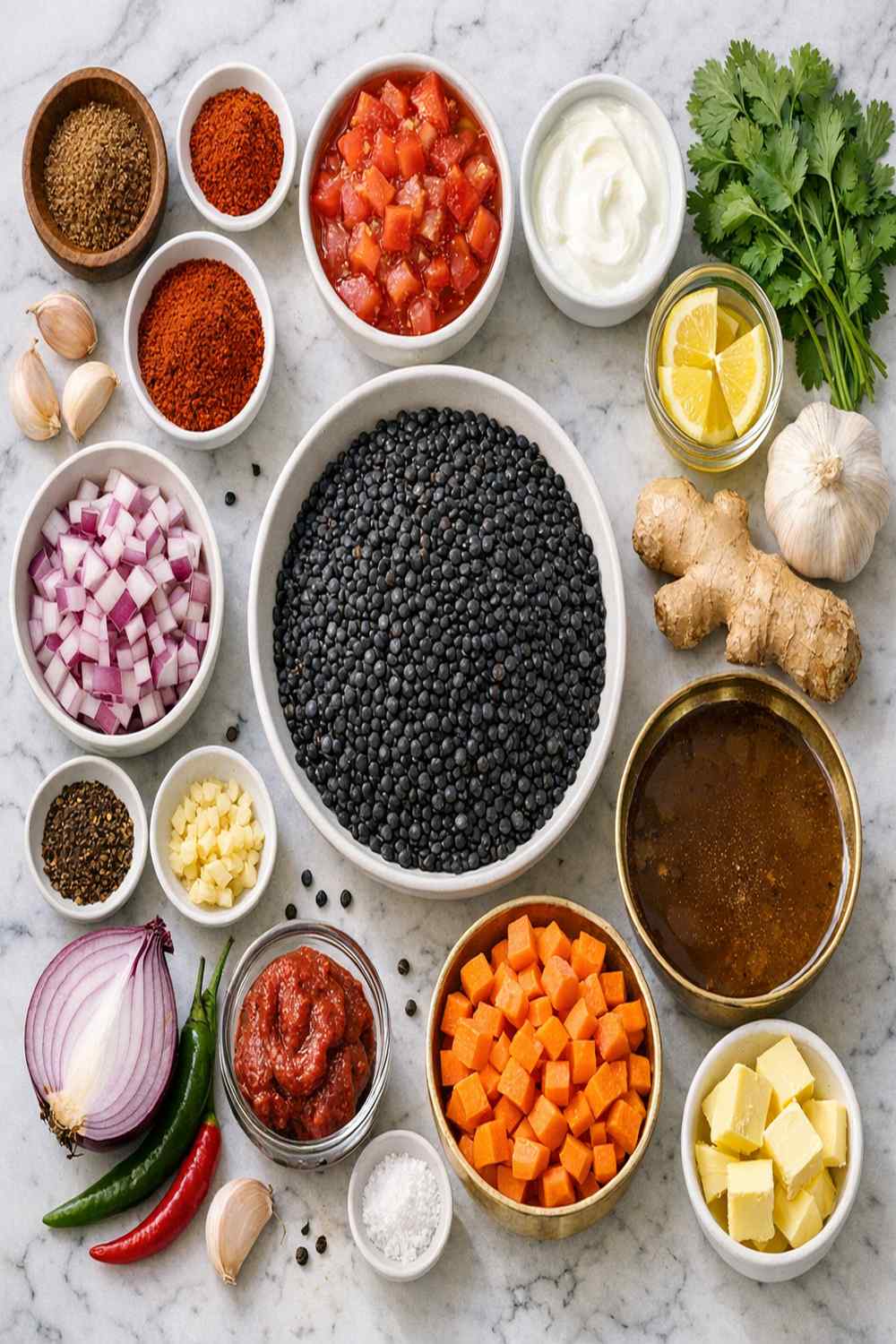
Here’s everything you need for an impressive spread that comes together faster than your guests will believe:
- 8 ounces burrata, labneh, or creamy cheese of choice (the cool richness contrasts beautifully with warm lentils)
- 1 tablespoon fresh lemon juice (for brightness in the yogurt sauce option)
- 1 teaspoon kosher salt (divided between lentils and onions)
- 1 cup full-fat Greek yogurt (if making the tangy cream sauce alternative)
- 1 teaspoon flaky sea salt such as Maldon (for finishing brightness)
- 2 tablespoons extra-virgin olive oil (good quality makes a difference in the final bite)
- ¼ cup white balsamic vinegar (lighter in color than regular balsamic, with bright acidity)
- 5 ounces fresh baby spinach (tender enough to wilt gently from residual heat)
- ½ cup black lentils (these hold their shape beautifully, unlike softer varieties)
- 1 large yellow onion (thinly sliced, about ⅛-inch thickness for even cooking)
How to Make Black Lentil Recipe for Your Occasion
Here’s where the magic happens. This technique is straightforward, but there are small moments where attention makes the difference. You’re going to feel completely in control of this process, and that confidence translates to the final dish. Let’s cook something special together.
Step 1: Begin Your Lentils With Purpose
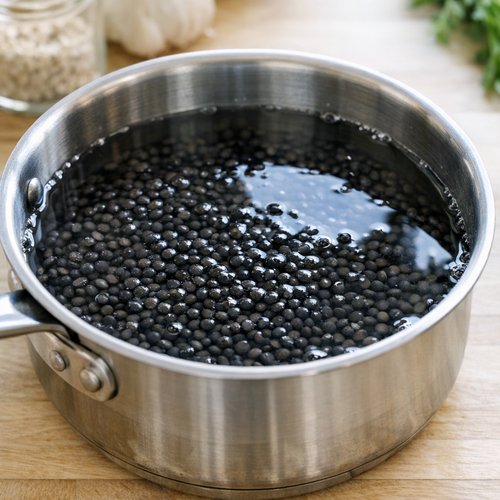
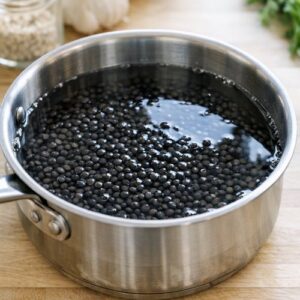
Place your black lentils in a small pot and cover them completely with water, at least an inch above the lentils. This ensures even cooking and prevents any from staying too firm. Add a generous teaspoon of kosher salt to the water—this seasons the lentils from the inside and also helps them maintain their shape (salt actually firms up legumes rather than softening them, contrary to old cooking myths).
Bring everything to a simmer over medium-high heat. Once you see that gentle rolling bubble, reduce the heat to maintain a quiet simmer. Don’t let it boil aggressively—that’s how lentils break apart. Set a timer for 23-25 minutes and let them cook undisturbed. You’ll know they’re done when they’re tender but still hold their shape and have a slight firmness when you bite into one. Taste one before draining—this is your quality check.
Step 2: Create Your Caramelized Onion Foundation
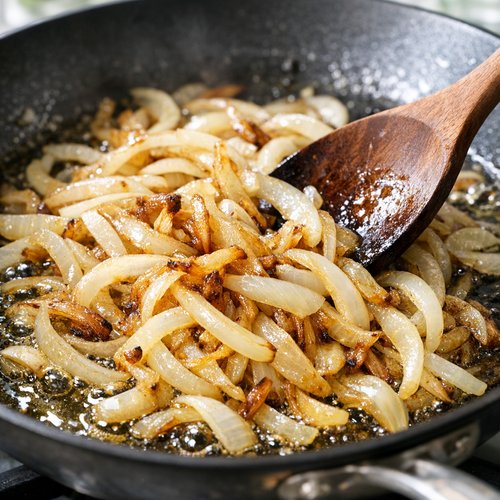
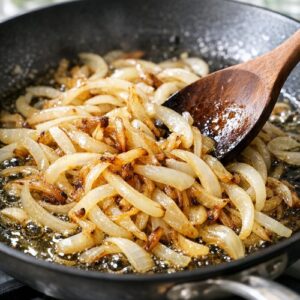
While your lentils are simmering, it’s time to begin the onion magic. In a large skillet, heat your extra-virgin olive oil over high heat until it shimmers. Add your thinly sliced onion and a small pinch of salt, then immediately cover the pan and reduce the heat to low. This is the technique that changes everything.
What you’re doing here is creating a controlled environment where the onions steam slightly in their own moisture before they caramelize. This prevents them from drying out and ensures they turn creamy-soft and deeply sweet rather than crispy and charred. I typically let them cook undisturbed for the entire time the lentils are cooking—about 23-25 minutes total. Every 5 minutes or so, lift the lid and check on them, allowing any condensation on the lid to drip back into the pan. You want them to be completely soft and golden.
Step 3: Create the Balsamic Reduction
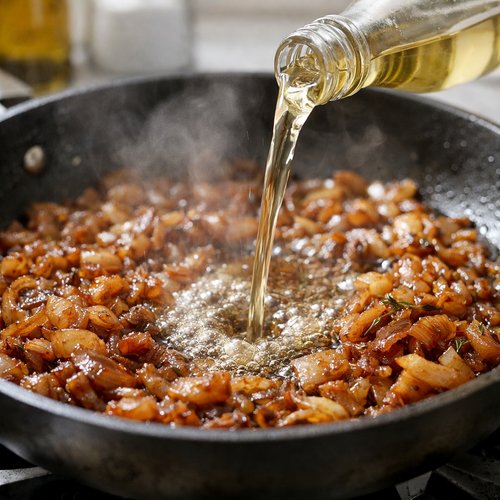
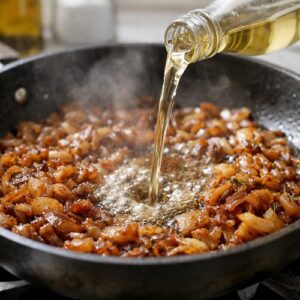
Once your lentils are perfectly cooked and drained, remove the lid from your onion pan and turn the heat up to medium. Pour in your white balsamic vinegar—this is the moment where your dish transforms. Let the vinegar reduce for about 2-3 minutes, stirring occasionally, until it becomes noticeably thicker and slightly syrupy. You’ll see the color deepen and the aroma shift from sharp vinegar to something more mellow and caramelized.
This reduction is crucial. It concentrates the flavor so you’re not left with a vinegary dish—instead, you have this sophisticated sweet-and-sour complexity that makes people pause and ask what’s in this.
Step 4: Bring Everything Together
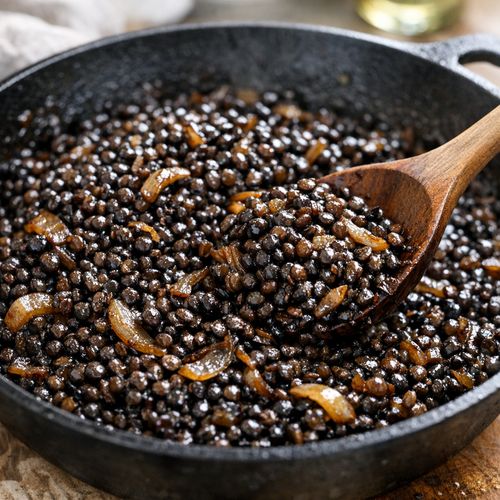
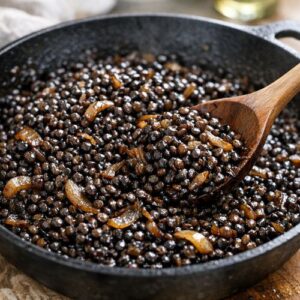
Add your warm, drained lentils to the onion pan with the balsamic reduction. Stir gently to combine, letting the lentils absorb some of that glossy, reduced vinegar. This is when the dish comes alive visually—the deep charcoal lentils against the golden onions.
Now add your baby spinach along with just a tiny pinch of salt. Turn off the heat and leave the spinach alone for a minute or two—the residual heat will wilt it gently. Then use tongs or a large spoon to incorporate the leaves throughout. You want the spinach distributed evenly, adding color and nutrition without overpowering the other flavors.
Taste your creation. This is your moment to adjust. Does it need more brightness? Add another small splash of balsamic. Does it need more savory depth? A few more grains of salt will help. Trust your palate.
Step 5: Choose Your Cheese and Plate With Intention
This is where the dish becomes truly personal. You have options, and each creates a slightly different experience.
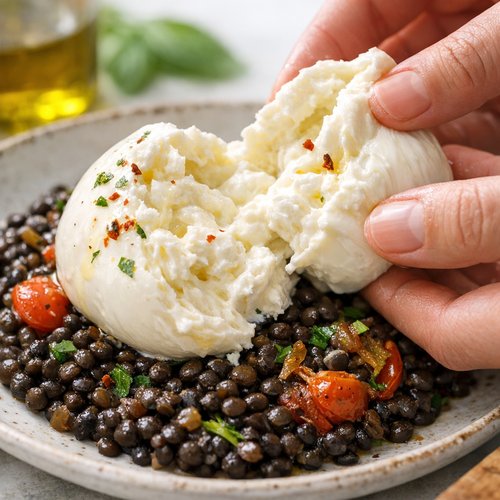
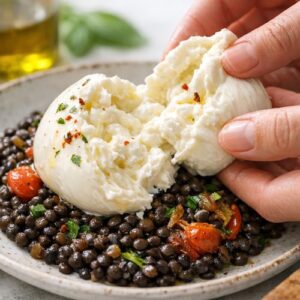
If using burrata: Break the ball apart gently with your fingers and drop creamy spoonfuls directly over the warm lentil mixture on each plate. The warm lentils will slightly soften the cheese edges, creating this beautiful interplay of temperatures.
If using labneh: Smear a generous amount across the center of each plate, then spoon the warm lentil mixture on top. The tangy creaminess grounds the earthy lentils beautifully.
If making the yogurt cream sauce: In a small bowl, stir together your Greek yogurt, fresh lemon juice, and salt until smooth and pourable. Drizzle this across your serving plate before topping with the lentil mixture. It’s the most economical option and adds a bright, acidic note.
Finish everything with a whisper of flaky sea salt. This adds textural contrast and a small jolt of brightness that makes the entire dish sing.
Make-Ahead Timeline
This is where I love this recipe even more—it adapts beautifully to your schedule. Here’s how I approach meal planning with this dish:
- 3 days before – Make your Greek yogurt cream sauce if you’re using it. Store it covered in the refrigerator. The flavors actually meld and improve over a day or two.
- 1 day before – Cook your lentils completely and store them in an airtight container in the refrigerator. Slice your onion, cover it tightly, and store separately. These components will be ready to come together quickly on event day.
- Morning of – Wash and dry your spinach. Do any final prep work. Your main cooking happens in the last 30 minutes before serving.
- 2 hours before guests arrive – If you’re making this ahead for reheating, cook everything through the spinach step. Let it cool slightly, then store in a covered container in the refrigerator. Reheat gently over low heat, stirring occasionally, just before serving. The cheese goes on fresh, never reheated.
How to Present and Plate Black Lentil Recipe
The beauty of this dish is that it’s inherently elegant, but small plating choices make the difference between “nice dinner” and “memorable evening.” I’ve learned that presentation matters because it signals to your guests that you’ve thought about their experience from start to finish.
Start with a warm plate—this keeps your lentils at proper temperature throughout the meal. If you’re serving the creamy cheese component, smear it first in a deliberate swoosh across the plate, then crown it with the warm lentil mixture. Let some of the cheese peek out from underneath.
- Create height and dimension – Don’t just pile everything in the center. Build the lentils slightly higher on one side, tuck the spinach visible at the edges, let the cheese show. This signals “restaurant food” immediately.
- Garnish with intention – A small drizzle of your best olive oil, a whisper of flaky salt, perhaps a few microgreens or fresh herb leaves if you have them. These small touches cost nothing but make the dish feel complete and considered.
- Serve immediately – This dish is best enjoyed while the lentils are still warm and the cheese is cool. The temperature contrast is part of the appeal.
Seasonal Variations
One of my favorite aspects of teaching nutrition is understanding how seasonal eating actually improves both flavor and nutrient density. This base recipe adapts beautifully throughout the year:
- Spring and Summer variation – Swap the baby spinach for fresh peppery arugula, added after plating so it stays crisp. Add fresh mint leaves and a squeeze of lemon juice. Consider using a bright, tangy chèvre instead of burrata. The result feels lighter and more herbaceous—perfect for warm-weather entertaining.
- Fall and Winter variation – Keep the spinach but add roasted beets or roasted Brussels sprouts to the lentil mixture. Increase the balsamic vinegar slightly to ⅓ cup for a deeper, richer profile. Use labneh or a creamy goat cheese and garnish with toasted nuts like walnuts or pecans. The earthiness deepens and the dish becomes more substantial.
What to Serve Alongside Black Lentil Recipe
This is a complete main course, but it becomes memorable when you build a thoughtful menu around it. I think about what will complement without competing with the lentil’s earthy elegance.
Start with a simple salad featuring acidic components—perhaps a bright vinaigrette that echoes the balsamic notes in the lentils. A simple apple vinaigrette recipe would be beautiful, or even just baby greens with lemon juice and olive oil.
- A vegetable side that honors simplicity – Perhaps roasted balsamic asparagus or simply seasoned green beans. You want the lentil dish to remain the star.
- Crusty bread or a grain component – Warmed bread to soak up any remaining sauce, or a simple pilaf if you want to add substance without heaviness.
- A light dessert – Something fruit-forward rather than heavy. Your guests will be satisfied by the lentil’s richness, so skip the dense cake. Consider something delicate and refreshing.
Can I Store Black Lentil Recipe?
Yes, and I actually prefer making this ahead. Here’s exactly how to handle storage:
Refrigerator storage: Cook everything through the spinach step, then let cool to room temperature. Store in an airtight container for up to 4 days. The flavors actually improve as they meld. When you’re ready to serve, reheat gently over low heat with a splash of water if needed, then top with fresh cheese and flaky salt.
Freezer storage: The cooked lentil mixture (without the cheese) freezes beautifully for up to 3 months. Freeze it in a flat container or even in portions in ice cube trays if you’re planning individual meals. Thaw overnight in the refrigerator before reheating gently.
Important note: Never freeze the cheese component. Always add fresh, cold cheese just before serving. This preserves the temperature and textural contrast that makes the dish special.
Nutrition Information
As a registered dietitian, I’m passionate about understanding not just what we eat, but why it nourishes us. Based on USDA nutritional data, this recipe (per serving, assuming 4 servings with 2 ounces cheese per serving) provides approximately 310 calories, 12 grams of protein, 18 grams of fat, and 28 grams of carbohydrates, with 7 grams of fiber.
What I love about this nutritionally: Black lentils are a complete protein source containing all essential amino acids, making them genuinely satiating. The fiber content supports digestive health and stable blood sugar. The olive oil provides monounsaturated fats that improve cholesterol profiles. The spinach adds iron, folate, and antioxidants. The balsamic vinegar contains polyphenols with anti-inflammatory properties. The creamy cheese adds calcium and fat-soluble vitamins. This isn’t just delicious—it’s genuinely nourishing in a way that acknowledges the full complexity of good nutrition.
Expert’s Nutritional Tip: The Black Lentil Advantage
Most people don’t realize that black lentils have the lowest glycemic index of all lentil varieties. This means they create the slowest, most stable blood sugar response—which keeps you satisfied longer and supports steady energy throughout your day. When combined with the healthy fat from olive oil and cheese, and the fiber from spinach, this becomes a blood-sugar-balancing meal that tastes entirely indulgent. That’s the magic of cooking with intention from a nutritional perspective.
Common Mistakes to Avoid
I’ve taught enough home cooks to know exactly where things tend to go sideways. Let me save you some trouble:
- Overcooking the lentils – This is the most common mistake. Black lentils can go from perfect to mushy very quickly. Start checking at 20 minutes and taste frequently. You want them tender but with a slight firmness when you bite. They’ll continue cooking slightly from residual heat, so it’s better to slightly undercook than overcook.
- Rushing the onions – Don’t skip the covered cooking phase or increase the heat to speed things up. That slow, covered cooking is what creates the deep sweetness. High heat at this stage creates harsh, burnt flavors. Trust the process. Your patience becomes flavor.
- Adding the vinegar to cold onions – The reduction only works properly when the pan is hot. Make sure your onions are fully cooked and golden before you add the balsamic and increase the heat. This ensures proper caramelization of the vinegar.
- Forgetting to taste and adjust – Every stove is different, every brand of vinegar has slightly different acidity. Taste your finished dish before plating. That five seconds of tasting and adjusting is what separates “pretty good” from “why does this taste so sophisticated?”

Black Lentil Recipe
Ingredients
Method
- Place your black lentils in a small pot and cover them completely with water, at least an inch above the lentils. This ensures even cooking and prevents any from staying too firm. Add a generous teaspoon of kosher salt to the water—this seasons the lentils from the inside and also helps them maintain their shape (salt actually firms up legumes rather than softening them, contrary to old cooking myths). Bring everything to a simmer over medium-high heat. Once you see that gentle rolling bubble, reduce the heat to maintain a quiet simmer. Don't let it boil aggressively—that's how lentils break apart. Set a timer for 23-25 minutes and let them cook undisturbed. You'll know they're done when they're tender but still hold their shape and have a slight firmness when you bite into one. Taste one before draining—this is your quality check.
- While your lentils are simmering, it's time to begin the onion magic. In a large skillet, heat your extra-virgin olive oil over high heat until it shimmers. Add your thinly sliced onion and a small pinch of salt, then immediately cover the pan and reduce the heat to low. This is the technique that changes everything. What you're doing here is creating a controlled environment where the onions steam slightly in their own moisture before they caramelize. This prevents them from drying out and ensures they turn creamy-soft and deeply sweet rather than crispy and charred. I typically let them cook undisturbed for the entire time the lentils are cooking—about 23-25 minutes total. Every 5 minutes or so, lift the lid and check on them, allowing any condensation on the lid to drip back into the pan. You want them to be completely soft and golden.
- Once your lentils are perfectly cooked and drained, remove the lid from your onion pan and turn the heat up to medium. Pour in your white balsamic vinegar—this is the moment where your dish transforms. Let the vinegar reduce for about 2-3 minutes, stirring occasionally, until it becomes noticeably thicker and slightly syrupy. You'll see the color deepen and the aroma shift from sharp vinegar to something more mellow and caramelized. This reduction is crucial. It concentrates the flavor so you're not left with a vinegary dish—instead, you have this sophisticated sweet-and-sour complexity that makes people pause and ask what's in this.
- Add your warm, drained lentils to the onion pan with the balsamic reduction. Stir gently to combine, letting the lentils absorb some of that glossy, reduced vinegar. This is when the dish comes alive visually—the deep charcoal lentils against the golden onions. Now add your baby spinach along with just a tiny pinch of salt. Turn off the heat and leave the spinach alone for a minute or two—the residual heat will wilt it gently. Then use tongs or a large spoon to incorporate the leaves throughout. You want the spinach distributed evenly, adding color and nutrition without overpowering the other flavors. Taste your creation. This is your moment to adjust. Does it need more brightness? Add another small splash of balsamic. Does it need more savory depth? A few more grains of salt will help. Trust your palate.
- This is where the dish becomes truly personal. You have options, and each creates a slightly different experience. If using burrata: Break the ball apart gently with your fingers and drop creamy spoonfuls directly over the warm lentil mixture on each plate. The warm lentils will slightly soften the cheese edges, creating this beautiful interplay of temperatures. If using labneh: Smear a generous amount across the center of each plate, then spoon the warm lentil mixture on top. The tangy creaminess grounds the earthy lentils beautifully. If making the yogurt cream sauce: In a small bowl, stir together your Greek yogurt, fresh lemon juice, and salt until smooth and pourable. Drizzle this across your serving plate before topping with the lentil mixture. It's the most economical option and adds a bright, acidic note. Finish everything with a whisper of flaky sea salt. This adds textural contrast and a small jolt of brightness that makes the entire dish sing.
Notes
FAQs
Can I make this dish completely ahead and reheat it for my dinner party?
Absolutely. This is actually one of my preferred strategies for entertaining. Cook everything except the cheese component and store in the refrigerator for up to 4 days. About 15 minutes before serving, reheat gently over low heat, stirring occasionally and adding a splash of water if the mixture seems dry. Meanwhile, bring your plates to room temperature so you’re not placing cold lentils on cold plates. Add fresh cheese just before serving—this maintains the textural contrast that makes the dish special. The finished dish should be warm but not piping hot; the cheese should be cool. That temperature play is part of the design.
What if I can’t find black lentils or prefer to use something else?
French green lentils work beautifully as a substitute. They hold their shape similarly and have a pleasant slightly peppery flavor. They’ll take a few minutes longer to cook—usually 28-32 minutes—so plan accordingly. Brown lentils will work in a pinch, but they tend to become softer and the texture becomes more of a rustic preparation. Avoid red lentils entirely; they break down into almost a purée and will change the entire character of the dish. If you’re substituting, taste frequently as you approach the end of cooking.
I’m serving this to someone with a dairy allergy. What should I do?
The good news is that the lentil and onion base stands completely on its own. You have options: serve the lentils without any cheese component and let the silky spinach and glossy balsamic reduction be the star, or prepare a dairy-free cream using cashew butter blended with vegetable broth and lemon juice. Some of my guests actually prefer it this way—the lentils become the true focal point rather than a vehicle for cheese.
Is there a way to add more protein to this for a heartier meal?
The black lentils already provide a respectable protein hit, but if you want to increase it further, consider adding a handful of toasted nuts to each plate—walnuts or pecans work beautifully. Or serve alongside a grain like quinoa or farro that will build up the protein profile further. Some people add a poached egg on top, which adds both protein and richness. If you’re thinking of adding meat, a small portion of prosciutto or pancetta would be elegant—but honestly, this dish is so satisfying as-is that you might not need it.
This recipe seems fancy, but how much actual cooking time am I spending?
This is what I love about this dish. Your active cooking time is genuinely about 10 minutes—slicing the onion, starting the lentils, setting up the skillet. Then you’re letting time and heat do the work while you finish other prep, set the table, or take a breath. The total elapsed time is about 30 minutes, but you’re not standing over the stove stressed. That’s the hallmark of a well-designed recipe: it feels more impressive than the effort required.
More Recipes for Your Table
- this cozy soup – A cozy, heartier take on lentils that works beautifully for cooler months and meal prep
- this cozy soup – Another elegant vegetable-forward dish that shares this recipe’s sophisticated simplicity
Making this black lentil recipe is about more than just feeding yourself or your guests—it’s about creating space for presence around the table. It’s about proving to yourself that elegant cooking doesn’t require stress or complicated techniques. It’s about honoring the tradition of feeding people with intention, the way my grandmother did in that kitchen where this all began.
I hope you make this soon. I hope you taste it and feel that quiet moment of recognition—that pause where you understand you’ve created something real and nourishing and genuinely delicious. And I hope, when someone asks for the recipe, you’ll share it knowing that cooking this for another person is one of the most meaningful things you can do. Happy cooking!