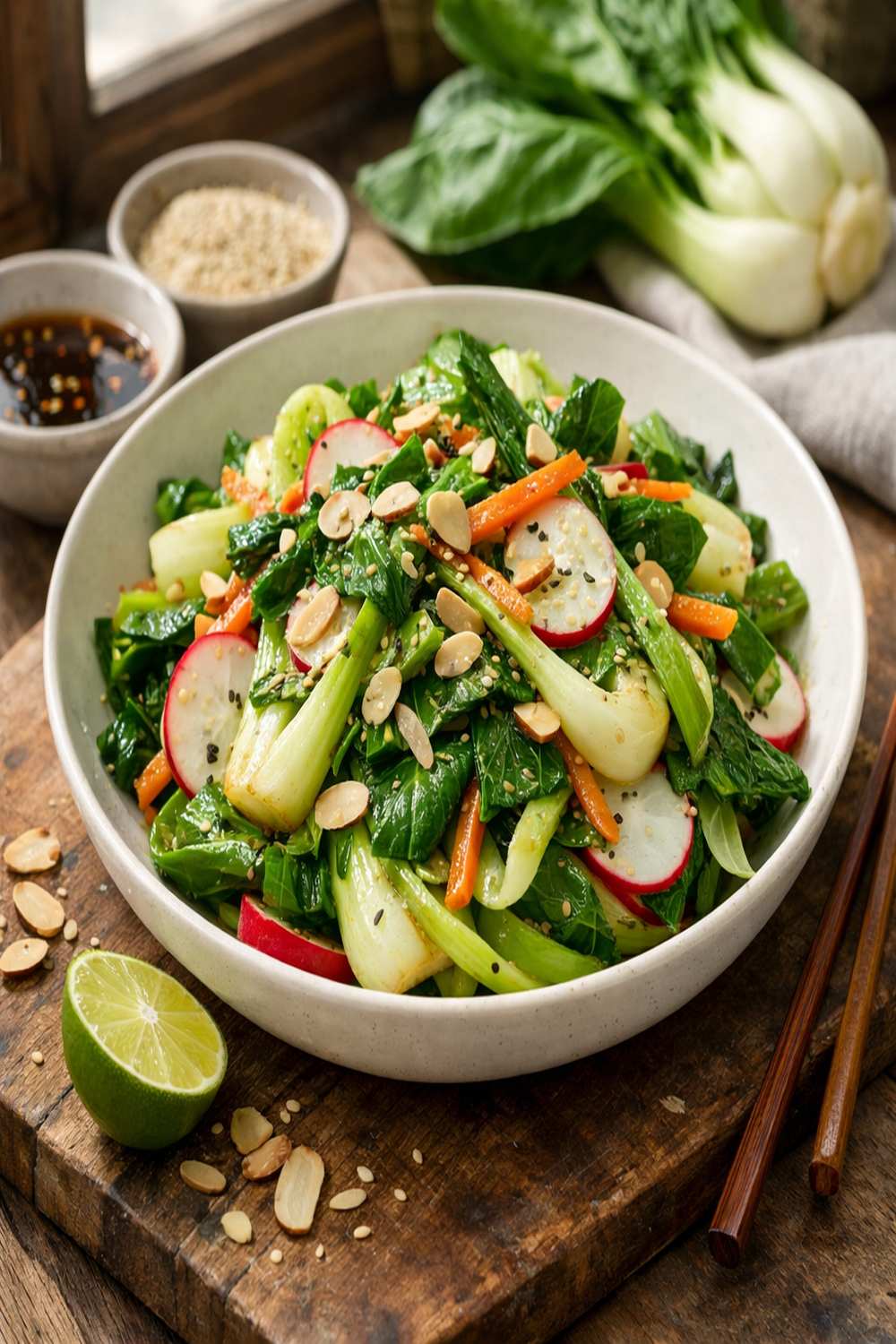

Ingredients
Method
Step 1: Prepare Your Vegetables With Intention
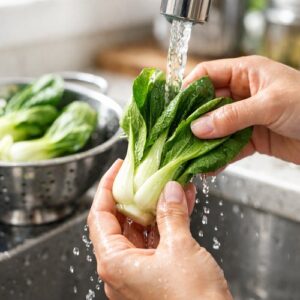
- Begin by rinsing your baby bok choy thoroughly under cool running water. Hold each piece gently between your fingers and run water through the layers where soil hides—this takes 30 seconds and prevents grit in your finished salad. Pat everything completely dry with paper towels or a clean kitchen towel, as excess moisture dilutes your dressing and costs you flavor. Stack your clean bok choy pieces and slice them crosswise into thin, ribbon-like strips. This technique, borrowed from professional kitchens, increases surface area so the dressing clings beautifully to each piece. For the carrot, angle your knife at 45 degrees as you slice—this isn't just pretty, it's practical. The diagonal cut increases the carrot's surface area, allowing flavors to penetrate better while making the vegetable feel more refined on the plate.
Step 2: Prepare the Remaining Vegetables
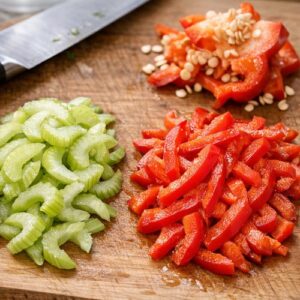
- Slice your celery stalks thinly, again using that angled cut for elegance and function. Remove the seeds from your red bell pepper and slice it into thin, uniform pieces. Here's where budget-conscious cooking meets professional technique: uniformly sized pieces ensure even dressing distribution and consistent texture in each bite. This matters because it's the difference between a salad that feels polished and one that feels rushed. Transfer all your prepared vegetables to a large bowl. At this point, you could refrigerate them for up to 8 hours if you're prepping ahead—this is a smart strategy for weeknight dinners when you're short on time.
Step 3: Build Your Dressing
- This is where your salad transforms from simple to restaurant-quality. In a separate small bowl or mason jar, combine your extra virgin olive oil, dark sesame oil, rice wine vinegar, soy sauce, and honey. Use a fork or whisk to emulsify these ingredients for about 30 seconds—you're creating a unified dressing rather than separated components. Here's a professional secret: the combination of two oils (olive and sesame) creates more complex flavor than either oil alone, and it costs less than buying specialty dressings. The honey acts as both sweetener and emulsifier, helping the oils blend with the vinegar and soy sauce. This is sophisticated cooking made accessible and affordable.
Step 4: Dress and Season to Perfection
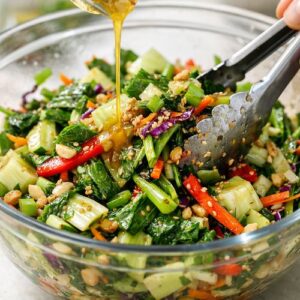
- Pour your dressing over the prepared vegetables and toss vigorously for about one minute. Don't be timid here—thorough tossing ensures every piece gets coated and the vegetables begin releasing their own juices, which mingle with the dressing to create more flavor. Taste a piece and adjust your seasoning with sea salt and freshly ground black pepper. This is crucial: professional chefs taste constantly throughout cooking, and you should too. Add salt in small pinches rather than all at once—you can always add more, but you can't take it back.
Step 5: Garnish and Serve
- Transfer your finished salad to a serving platter or individual bowls. Scatter your toasted sesame seeds and sliced almonds across the top. Garnishing just before serving preserves the nuts' crunch—if they sit in dressing too long, they'll soften and lose their appeal. This final touch isn't decoration; it's textural contrast that makes every bite interesting. Serve immediately while the vegetables are crisp and the almonds are at their crunchiest. This salad is best enjoyed fresh, though I'll share storage tips below for any leftovers.
Notes
- Shop Asian markets for bok choy and sesame seeds - I've found prices 40% lower at Pittsburgh's Strip District shops compared to conventional supermarkets. The quality is often superior, and you'll discover other ingredients that expand your cooking repertoire.
- Buy oils and vinegars in bulk or larger sizes - The per-tablespoon cost drops dramatically when you purchase a full 25.5-ounce bottle of sesame oil versus the tiny bottles. These pantry staples keep for months, so the investment pays dividends across dozens of recipes.
- Time your vegetable shopping for mid-week sales - Most stores mark down produce Tuesday and Wednesday mornings when preparing for weekend crowds. Call ahead or check apps to catch these deals on bell peppers and fresh greens.
- Splurge on quality sesame oil, save on soy sauce - The toasted sesame oil is what makes this salad taste expensive and complex. Standard soy sauce performs identically whether you buy the $2 bottle or the premium $8 version, so save your money there.
- Buy nuts and seeds from bulk bins - Buying sesame seeds and almonds loose costs about half the price of pre-packaged options, and you can purchase exactly what you need without waste.