
Ingredients
Method
Step 1: Prepare Your Workspace and Equipment
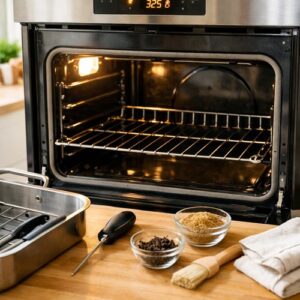
- Start by positioning your oven rack in the lower-middle position and preheating to 325 degrees Fahrenheit. This lower temperature allows the ham to cook through evenly without the exterior drying before the interior reaches food-safe temperatures. Choose a roasting pan deep enough to hold roughly ½ inch of liquid—this humidity is essential for moisture retention. If your ham still has a plastic disk covering the bone, remove and discard this immediately—it's designed for grocery store display, not cooking.
Step 2: Create Your Flavor Base
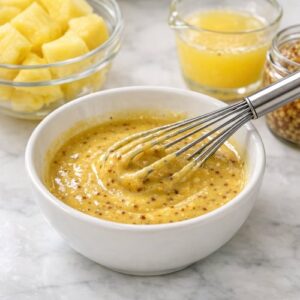
- In a small bowl, whisk together the whole-grain Dijon mustard and ¼ cup of your fresh pineapple juice until completely smooth. This becomes your foundation glaze—the layer that will adhere to the ham and develop deep, savory-sweet notes during roasting. The mustard's emulsifiers help the glaze cling evenly rather than pooling at the bottom of the pan. Using whole-grain mustard instead of smooth yellow mustard adds polyphenol antioxidants and creates visual appeal with visible seed particles.
Step 3: Position and Initial Glaze
- Place the ham flat-side down in your prepared roasting pan. Brush the entire exterior surface generously with your mustard mixture, working it into any scored sections and around the bone end. This initial coating serves multiple purposes: it adds flavor, protects the surface from excessive drying, and creates the foundation for the final caramelized glaze. Cover the entire pan tightly with heavy-duty aluminum foil, pressing the edges firmly against the pan sides to trap steam.
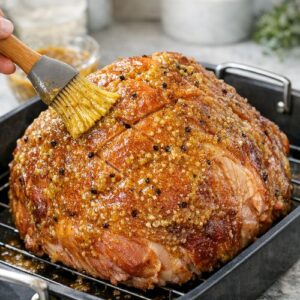
Step 4: Calculate and Execute Low-Temperature Roasting
- Roast for approximately 12 to 15 minutes per pound, following the package instructions if they're more specific. For a 7-pound ham, expect roughly 85 to 105 minutes. The goal is reaching an internal temperature of 140 degrees Fahrenheit at the thickest part, away from the bone. I use an instant-read meat thermometer inserted horizontally into the meat to avoid hitting bone, which gives false readings. The foil covering maintains humidity, preventing the exterior from drying while the interior gently reaches temperature.
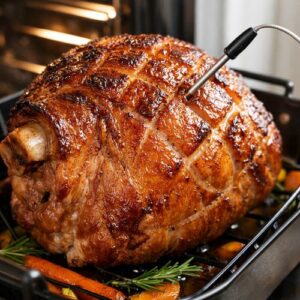
Step 5: Prepare Your Finishing Glaze
- While your ham roasts, prepare the component that transforms this into a showstopper. In a heavy-bottomed saucepan, combine your remaining ½ cup pineapple juice, maple syrup, coconut sugar, fresh minced ginger, and ground ginger. Bring this mixture to a gentle boil over medium-high heat, whisking occasionally to ensure the sugars dissolve completely. Once boiling, immediately reduce heat to low and simmer for exactly 2 to 3 minutes, stirring gently. If using cornstarch for extra gloss, whisk it with 1 tablespoon cold water first, then stir into the simmering glaze in the final 30 seconds. The glaze should thicken slightly and coat the back of a spoon. Remove from heat and allow to cool to room temperature—this prevents it from cooking the ham's exterior too quickly or running off before caramelizing.
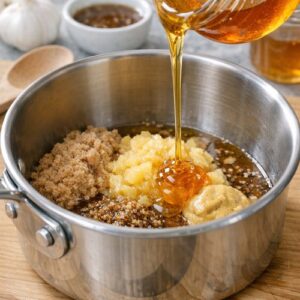
Step 6: The Final Transformation
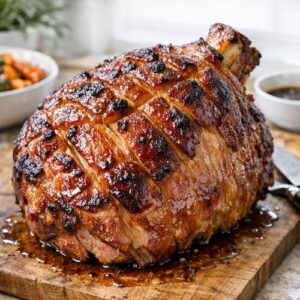
- When your ham has 15 minutes of cooking time remaining, carefully remove it from the oven and increase the temperature to 425 degrees Fahrenheit. This temperature boost creates the Maillard reaction—the chemical process that develops those gorgeous caramelized, mahogany-colored notes you're craving. Brush your cooled glaze evenly over the entire ham exterior, working it into scored sections generously. Return the uncovered ham to the oven and roast for the final 15 minutes, or until the glaze is deeply caramelized and bubbly at the edges. The internal temperature should now read 140 to 145 degrees Fahrenheit. The transformation happens quickly—watch after 10 minutes to prevent burning. The glaze should look glossy and burnished, not burnt.
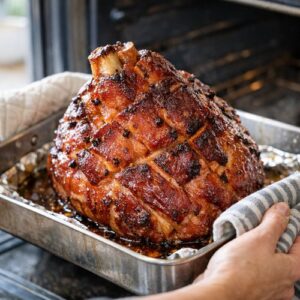
Step 7: Rest and Serve
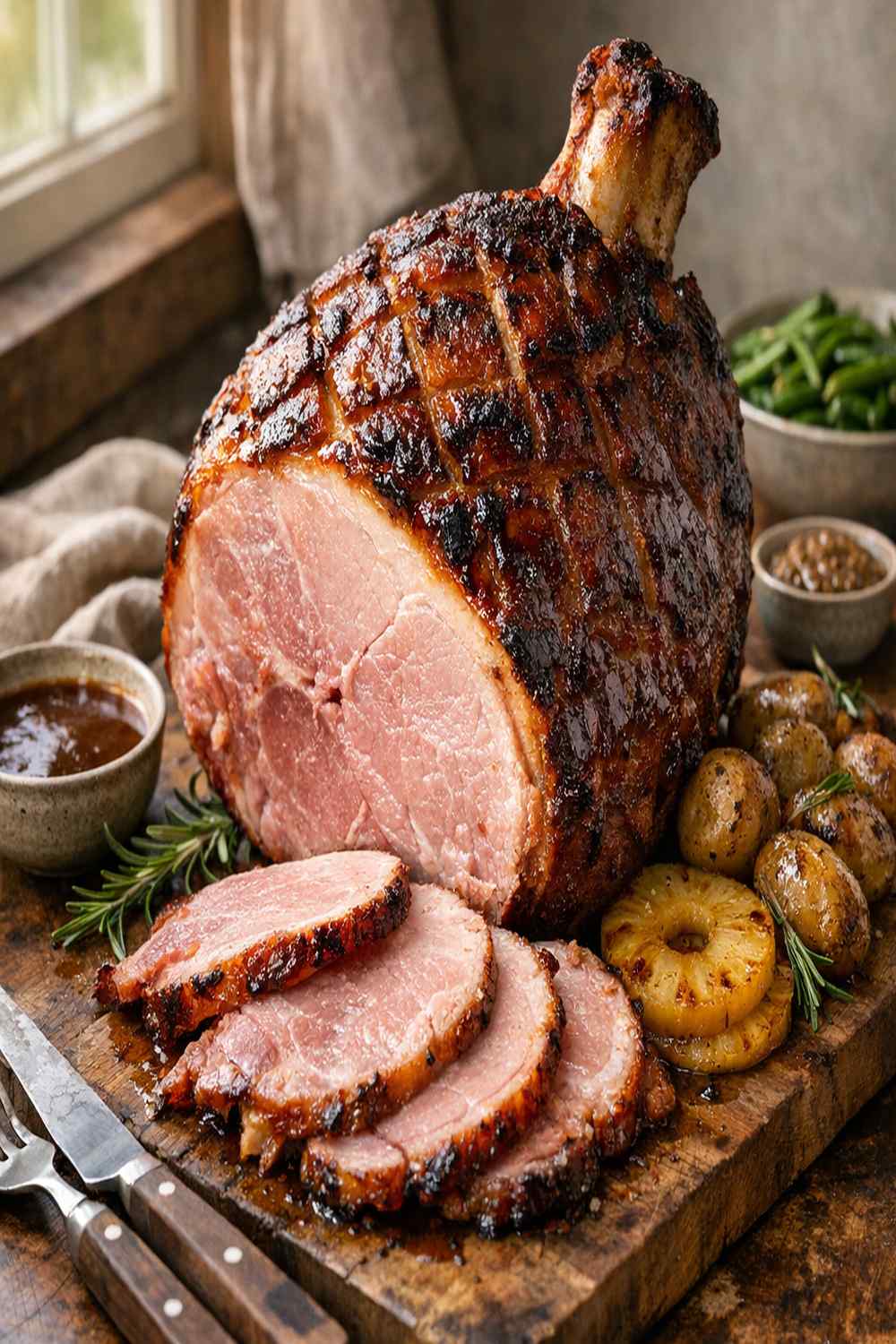
- Remove the ham from the oven and let it rest, uncovered, for 10 minutes before carving. This resting period allows the juices to redistribute, ensuring every slice remains moist and tender. Transfer to a serving platter, drizzle with any pan juices, and garnish with fresh thyme if desired.