Bourbon Pecan Pie Recipe
 Rosa Crumley
July 29, 2026
Rosa Crumley
July 29, 2026
This post contains affiliate links. As an Amazon Associate I earn from qualifying purchases.
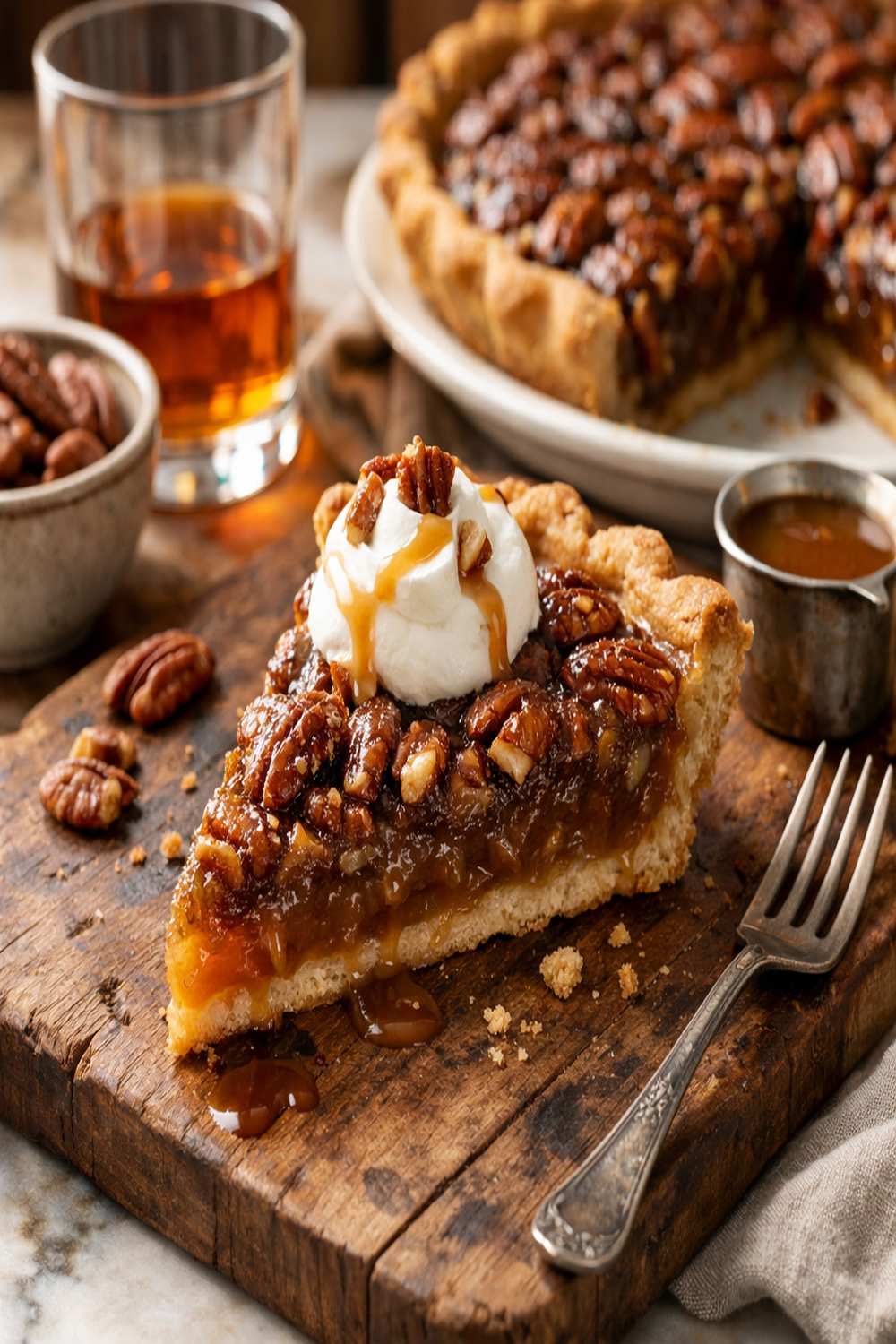
I still remember the first time my grandmother pulled a bourbon pecan pie from her oven on Thanksgiving morning. The aroma—buttery, toasted nuts, and that unmistakable whisper of bourbon—filled her entire kitchen in Pittsburgh and seemed to announce the holiday itself. I was maybe seven years old, standing on a step stool beside her, watching the golden filling settle with a gentle jiggle at the center. She never rushed it from the oven. She’d say, “Rosa, patience makes it perfect.” That pie taught me that some recipes carry more than ingredients; they carry stories, traditions, and the warmth of people we love.
Today, as a registered dietitian, I understand the nutritional balance in this classic dessert—and I’ve learned how to honor my grandmother’s wisdom while making it accessible for home cooks everywhere. This bourbon pecan pie recipe bridges Southern tradition with modern kitchen confidence, proving you don’t need years of experience to create restaurant-quality results. Whether you’re planning your holiday menu or simply craving something sophisticated, this recipe will become your go-to.
Authentic Bourbon Pecan Pie Recipe: The Story Behind the Classic
Growing up between my grandmother’s Pennsylvania kitchen and family roots that stretched back through the American South, I developed a deep appreciation for how bourbon pecan pie connects us to heritage. This isn’t just a dessert—it’s edible history. My grandmother taught me that authentic versions respect three pillars: quality bourbon (never the cheap stuff), fresh pecans (toasted, never raw), and a custard-like filling that’s barely set when removed from the oven.
I’ve researched this pie extensively during my nutrition education and culinary exploration. The beauty of bourbon pecan pie lies in its simplicity and the quality of each ingredient’s contribution. Unlike many modern adaptations that rely on convenience products, the authentic version celebrates restraint and precision. The bourbon isn’t about getting tipsy—it’s about adding complexity and depth that makes people pause and ask, “What is that incredible flavor?”
The History and Cultural Significance of Bourbon Pecan Pie
Pecan pie itself emerged in the American South during the 19th century, once European pie-making traditions met the abundance of native American pecans. The pie became particularly significant in the post-Civil War era as a symbol of Southern hospitality and refinement. When bourbon entered the recipe—likely in the early 20th century—it represented the region’s bourbon distilling heritage, particularly from Kentucky.
Bourbon pecan pie represents more than just dessert evolution; it reflects the American story of adaptation, abundance, and celebration. The addition of bourbon transformed a good pie into a sophisticated statement—something served at important gatherings, holiday tables, and moments worth remembering. In Southern culture, this pie appears at Thanksgiving, Christmas, weddings, and significant life celebrations.
During the Great Depression and beyond, pecan pie became a way for families to showcase elegance despite economic constraints. A single pie could feed a gathering and demonstrate care through ingredient quality rather than quantity. This cultural significance still resonates today. When I serve this pie, I’m honoring generations of cooks who understood that food is one of our most powerful languages.
What Makes an Authentic Bourbon Pecan Pie Recipe
Authenticity in bourbon pecan pie isn’t about rigid rules—it’s about understanding why each element matters. I’ve encountered countless versions that stray from tradition, and while creativity has its place, the classic recipe succeeds because of carefully balanced proportions and techniques developed over time.
Here’s what distinguishes a genuinely authentic bourbon pecan pie from simplified or overly modernized versions:
- The custard filling, not the candy filling – Authentic bourbon pecan pie uses a custard-based filling made from eggs, sugar, and corn syrup that creates a silky, barely-set center rather than a hard, candy-like texture. This requires stopping baking while the center still jiggles slightly, which takes courage but creates the proper texture as it cools.
- Real bourbon, properly measured – Authentic recipes use actual bourbon (not imitation flavoring) in measured quantities that add sophistication without overwhelming. Too much bourbon masks the pecans; too little wastes the ingredient’s potential.
- Fresh pecans, toasted for depth – Traditional recipes honor the pecans themselves by using fresh, quality nuts. Many modern versions use raw or old pecans that taste flat. Toasting awakens their natural oils and nutty complexity.
- A homemade pie crust, properly prepared – Authentic versions respect the foundation. The crust should be blind-baked (partially baked beforehand) to prevent sogginess and ensure crispy texture that contrasts beautifully with the soft filling.
The Ingredients – Sourcing the Real Thing
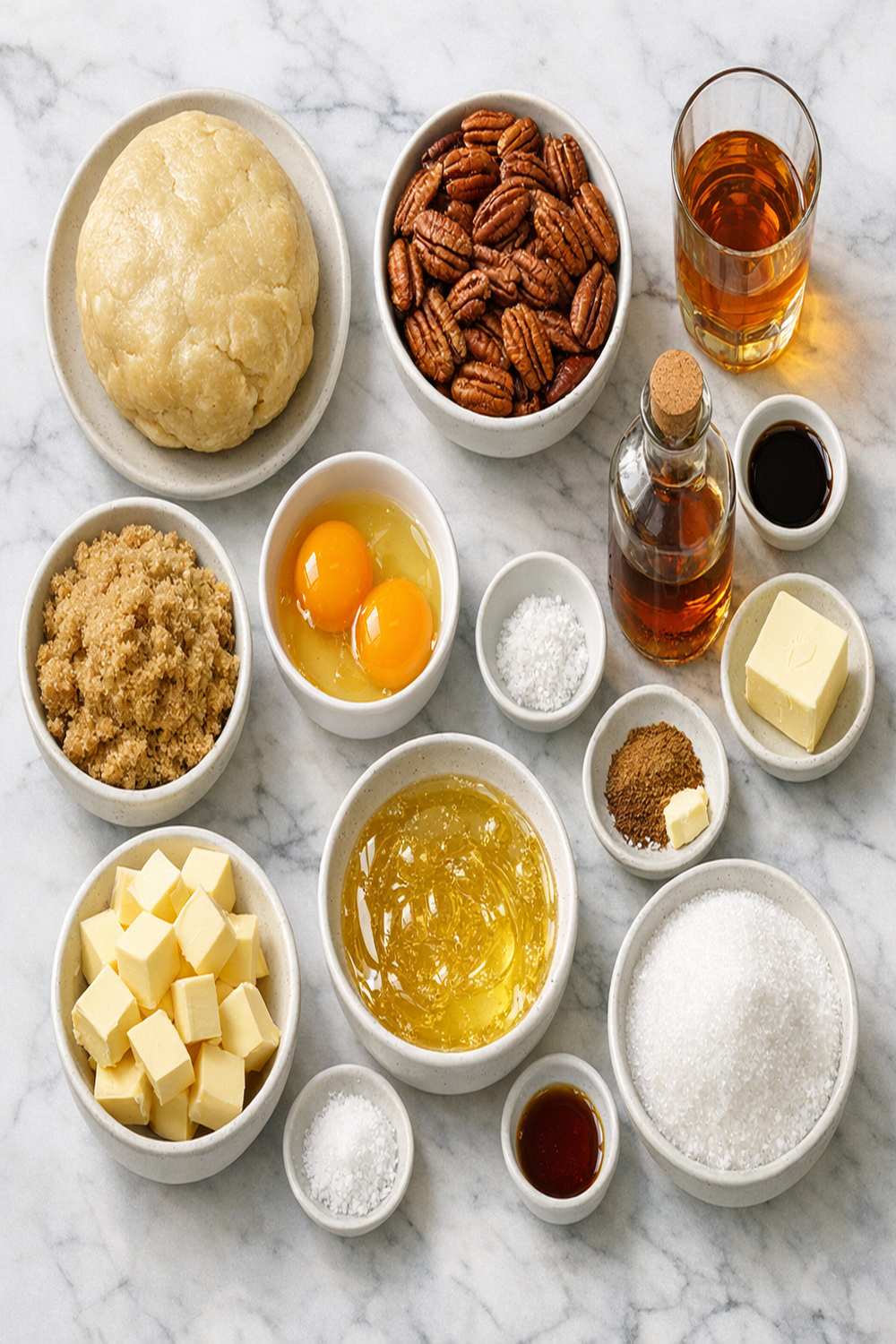
Creating an authentic bourbon pecan pie starts with respecting each ingredient. I’ve learned through decades of kitchen experience that quality ingredients aren’t optional—they’re the difference between a good pie and one that people remember. Here’s my guide to sourcing everything you need, along with strategies when traditional options aren’t immediately available.
For the Pie Filling
- 1 cup granulated sugar (white sugar provides clean sweetness without competing flavors)
- ⅓ cup unsalted butter (melted and slightly cooled, prevents cooking the eggs)
- 1 teaspoon pure vanilla extract (not imitation, which has harsh chemical notes)
- 1¼ cups pecans (coarsely chopped, preferably lightly toasted to deepen nutty flavor)
- 2 tablespoons bourbon (use mid-range quality from reputable Kentucky distillers—you want flavor, not fire)
- ½ cup light corn syrup (contributes mild sweetness and helps achieve custard texture)
- 3 large eggs (room temperature, which helps them blend smoothly into the filling)
- ¼ teaspoon fine sea salt (balances sweetness and enhances all flavors)
- ½ cup dark corn syrup (adds caramel notes and deeper color)
For the Crust
- 1 unbaked 9-inch pie shell (see below for homemade option)
Finding Quality Ingredients: For bourbon, visit a liquor store with knowledgeable staff rather than supermarkets. Ask for recommendations from Kentucky distilleries—Maker’s Mark, Woodford Reserve, or Buffalo Trace all work beautifully. Avoid bottom-shelf options that taste harsh or chemical.
For pecans, buy from specialty stores, farmers markets, or online sources specializing in nuts during fall and winter (October through February). Freshness matters tremendously. Pecans should smell rich and sweet, never rancid. If purchasing pre-shelled pecans seems safer, smell the package carefully. Stale nuts ruin the entire pie.
For vanilla extract, I’m particular about using pure extract from reputable brands. Nielsen-Massey and Simply Organic are reliable choices. The difference between pure and imitation is substantial—imitation contains vanillin (the single compound) rather than real vanilla beans, creating a harsh, artificial taste.
If you cannot find quality corn syrups locally, online grocery delivery services reliably stock both light and dark varieties. Don’t substitute honey or agave—these create different textures and flavors that undermine the pie’s authenticity.
The Traditional Method: How to Make Authentic Bourbon Pecan Pie
Making bourbon pecan pie is less about complex technique and more about understanding what each step accomplishes. I approach this recipe as an act of care—honoring tradition while building your confidence in the kitchen. Let’s walk through this together, step by step.
Step 1: Prepare Your Pie Shell
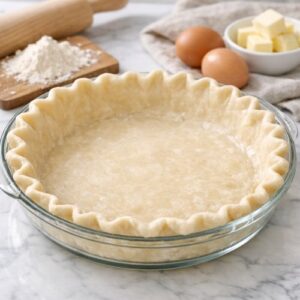
Begin by either preparing your own pie crust from scratch or using quality store-bought dough. If making from scratch, I recommend a simple food processor method: pulse together 1¼ cups all-purpose flour, ½ teaspoon salt, and 1 tablespoon sugar, then add 6 tablespoons cold unsalted butter cut into pieces and pulse until the mixture resembles coarse sand. Add 3-4 tablespoons ice water one tablespoon at a time, pulsing just until the dough comes together.
Press the dough into your 9-inch pie pan, creating an even thickness along the bottom and sides. The traditional method here is crucial: prick the entire bottom and sides with a fork at roughly ½-inch intervals. This prevents the crust from puffing up and ensures even baking. This step, while simple, demonstrates respect for proper pie construction.
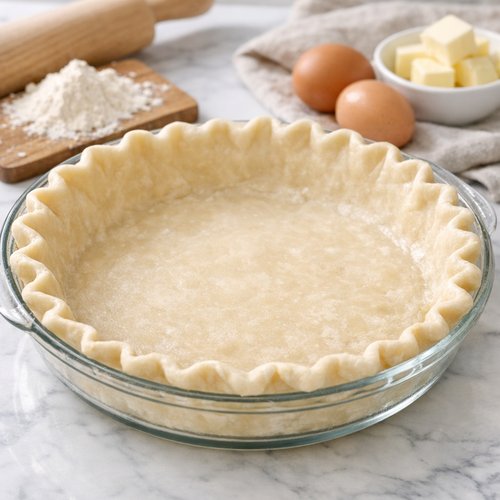
Place the prepared shell in your freezer for at least 15 minutes while you preheat your oven to 375 degrees Fahrenheit. This chilling step is traditional for good reason—it helps the crust maintain its structure and prevents excessive shrinking during baking.
Step 2: Mix the Filling with Care
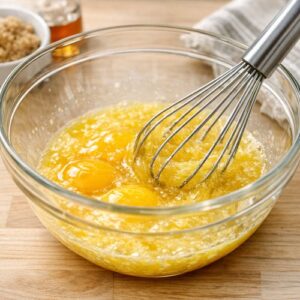
In a medium bowl, combine your 3 room-temperature eggs and whisk them lightly until just blended. This gentle approach prevents incorporating excess air, which can create a separated or curdled filling.
Add the 1 cup granulated sugar and whisk until the mixture becomes pale and slightly thick—approximately 1-2 minutes. This traditional step isn’t just about mixing; you’re creating the foundation for your custard’s texture.
Now add both the light and dark corn syrups (½ cup each) and whisk thoroughly until fully combined. The syrups should distribute evenly throughout the egg mixture, creating a uniform golden color.
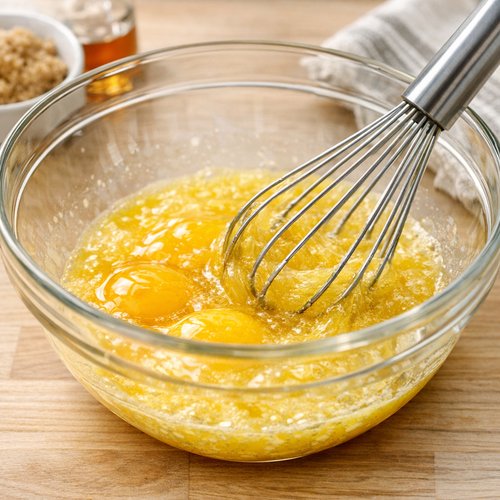
Slowly pour in your melted (but slightly cooled) ⅓ cup unsalted butter while whisking constantly. Never add hot melted butter directly to eggs—the temperature difference can scramble them. This caution reflects traditional cooking wisdom developed through countless kitchen lessons over generations.
Add your 2 tablespoons bourbon, 1 teaspoon vanilla extract, and ¼ teaspoon fine sea salt. Whisk until the mixture is completely smooth and homogeneous. The filling should be glossy and unified in color. Set aside.
Step 3: Layer the Pecans
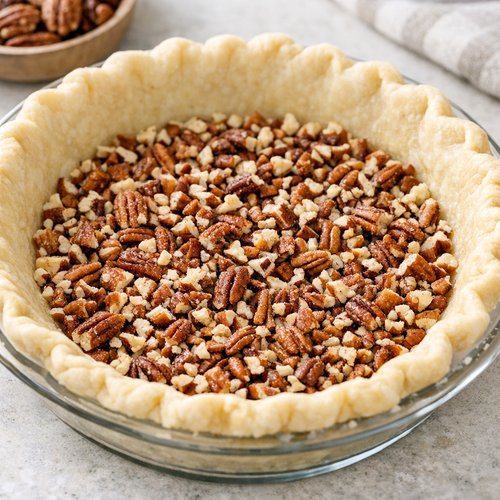
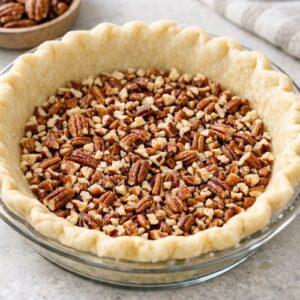
Remove your prepared pie shell from the freezer. Spread your 1¼ cups coarsely chopped pecans evenly across the bottom of the unbaked shell. This traditional layering method ensures that each slice contains pecans throughout rather than concentrating them in one area.
The reason pecans go in first (rather than mixing them into the filling) is authentically important: this method keeps the nuts from sinking to the bottom during baking. As the filling sets, the nuts stay suspended at various levels, creating better texture distribution in each slice.
Step 4: Pour and Bake
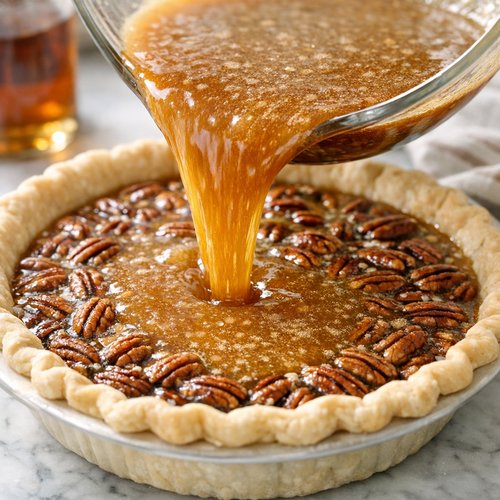
Carefully pour your prepared filling mixture over the pecans, filling the shell completely but leaving about ¼ inch of space at the rim to prevent overflow.
Place the pie on a baking sheet (for easier handling and to catch any drips) and transfer it to your preheated 375-degree oven. Bake for 35 to 45 minutes, watching carefully during the final minutes. The traditional endpoint is when the filling is set around the outer 2 inches but the center still jiggles slightly when you gently shake the pan—this is absolutely crucial.
The center should look barely underdone; don’t be tempted to bake longer. This requires faith in the process, but it’s how you achieve the proper custard-like texture. The residual heat will continue cooking the center after you remove it from the oven.
Step 5: Cool Properly
Remove the pie from the oven and place it on a wire cooling rack. Let it rest undisturbed for 10-15 minutes before serving, or allow it to cool completely (approximately 2 hours) for cleaner slices.
The cooling phase is traditional for important reasons: it allows the filling to set completely, developing its silky texture. Cutting warm pie results in a runny, messy presentation, while a fully cooled pie cuts cleanly and beautifully.
Regional Variations Around the World
While bourbon pecan pie is distinctly American, I’ve discovered fascinating variations that reflect regional ingredients and traditions:
- Southern Kentucky Tradition – Some regions add a splash of melted chocolate or cocoa powder to emphasize bourbon’s darker notes, creating a chocolate-bourbon-pecan variation that’s particularly popular around Louisville.
- Creole New Orleans Adaptation – New Orleans cooks sometimes substitute dark rum for bourbon and add a pinch of cayenne pepper or cinnamon, reflecting the Caribbean spice influences in Louisiana’s culinary tradition.
- Modern Texas Interpretation – Some Texas bakers incorporate praline elements, adding brown sugar and toasted pecan pieces to the filling itself rather than layering them at the bottom, reflecting the state’s love of pecans in savory applications as well.
Traditional Serving Customs
Bourbon pecan pie carries deep cultural meaning in how and when it’s served. In Southern tradition, this pie appears at specific moments: Thanksgiving dinner, Christmas Eve gatherings, formal dinner parties, and celebrations marking important life milestones. It’s rarely served casually—its presence signals that the occasion matters.
The traditional serving involves slicing the cooled pie into generous wedges and presenting each slice on simple white plates (to showcase the filling’s beautiful color and texture). Accompaniments are minimal but intentional: a small dollop of freshly whipped cream or a small scoop of vanilla ice cream provides temperature contrast and slight textural relief.
In many Southern homes, bourbon pecan pie is served as the finale to dinner, sometimes with coffee or dessert wine. The bourbon in the pie is never meant to be the focus—rather, it’s a subtle complexity that makes people pause and ask about the ingredient list. The meal’s ending becomes a conversation starter, a moment of connection around the table.
Some families serve slices at room temperature rather than chilled, believing this showcases the filling’s custard texture most authentically. Others prefer it slightly chilled. Both approaches honor tradition; the choice reflects personal preference and family custom.
Can I Store Bourbon Pecan Pie Recipe?
Yes, and it stores beautifully, which makes it ideal for advance preparation. Here’s my professional guidance on storage, informed by both traditional methods and food safety science:
Room temperature storage: A properly cooled bourbon pecan pie can sit on the counter, loosely covered with foil or a pie dome, for up to 24 hours. This mimics historical tradition when refrigeration wasn’t available.
Refrigerated storage: For longer storage, cover your cooled pie with plastic wrap and refrigerate it for up to 4 days. The filling will become slightly firmer when chilled, which actually makes slicing easier.
Frozen storage: Bourbon pecan pie freezes exceptionally well for up to 3 months. Wrap the cooled, unsliced pie tightly in plastic wrap, then again in aluminum foil to prevent freezer burn. Thaw overnight in the refrigerator before serving. The flavor and texture remain excellent.
For make-ahead entertaining, I recommend baking your pie the day before your event and refrigerating it. The flavors actually develop and deepen overnight, and you’ll have less stress on serving day. Simply remove it from the refrigerator 30 minutes before serving for optimal texture.
Nutrition Information
Let me provide you with nutritional information based on USDA analysis. One slice (assuming 10 slices per pie) contains approximately: 524 calories, 38g fat, 46g carbohydrates, 5g protein, and 2g dietary fiber.
From a registered dietitian’s perspective, I want to contextualize this. Bourbon pecan pie is a traditional dessert, and traditional desserts are meant to be enjoyed in portions as part of celebration. The pecans provide valuable nutrients: they’re rich in monounsaturated fats (the heart-healthy kind), fiber, and minerals like magnesium and copper. Pecans contain polyphenols, which are powerful antioxidants.
The bourbon itself adds virtually no calories after baking (the alcohol content cooks off) while contributing complex flavor compounds. This means the bourbon actually improves the nutrient profile by allowing you to enjoy a smaller portion—the sophisticated flavors satisfy more completely than overly sweet versions.
Historically, pecan pie in Southern and American food traditions was served in modest slices (usually between ⅛ and 1/10 of a pie), treating it as a special occasion indulgence rather than everyday food. This cultural approach to portion size made the pie sustainable within overall diets. I encourage this same respect for portions and celebration—enjoy pecan pie as the special occasion dessert it’s meant to be.
What Can I Serve With Bourbon Pecan Pie Recipe
Traditionally, bourbon pecan pie needs very little accompaniment—its complexity stands beautifully on its own. However, specific pairings enhance the experience and reflect Southern hospitality customs:
- Freshly whipped cream – The traditional pairing. Unsweetened or lightly sweetened whipped cream provides cool creaminess that contrasts with the warm, dense pie. Some families whip the cream with a splash of bourbon, creating a cohesive flavor experience.
- Vanilla bean ice cream – Slightly melting vanilla ice cream adds temperature contrast and textural relief. Choose quality vanilla (real vanilla bean specks visible) rather than artificial-tasting varieties.
- Hot coffee or dessert wine – Serving pie with strong, hot coffee or a small glass of dessert wine (like tawny port or cream sherry) honors the bourbon in the pie by continuing the sophisticated beverage thread through the meal.
- Spiced complementary flavors – While not traditionally served directly with the pie, serving it after a savory dinner works beautifully. If you’re planning a complete meal, consider pairing your bourbon pecan pie dinner with Skillet Chicken with Garlic Herb Butter Sauce earlier in the meal, which provides savory contrast.
Many Southern traditions pair bourbon pecan pie with Pumpkin Scones for a breakfast or brunch setting, particularly during autumn celebrations. The spices in pumpkin scones echo the subtle spice notes in the pie.
Expert’s Nutritional Tip: Pecans and Heart Health
As a registered dietitian, I want to highlight something important about pecans that many home cooks don’t realize. Pecans contain a unique combination of fats and polyphenols that research suggests support heart health, even in dishes that are admittedly indulgent.
A 2019 study published in the American Journal of Clinical Nutrition found that pecan consumption was associated with improved cholesterol profiles and reduced inflammation markers. Pecans are also particularly rich in vitamin E, which acts as an antioxidant throughout your body.
When you enjoy bourbon pecan pie—especially in the traditional single-slice portion at a special gathering—you’re actually getting some genuine nutritional benefit from the pecans themselves. This doesn’t make pie a health food, but it means the pecans aren’t just flavor; they’re contributing real nutritional value. Quality matters here; fresh, high-quality pecans have higher antioxidant content than stale, old nuts.
Make-Ahead Guide: Bourbon Pecan Pie
Planning ahead transforms holiday stress into confidence. Here’s my professional make-ahead strategy for bourbon pecan pie:
Three days before serving: Make your pie dough from scratch and freeze it in your pie pan. The dough improves with time, and freezing ensures it’s perfectly chilled when you’re ready to bake.
Two days before serving: Remove your pie shell from the freezer, prick it, and bake the complete pie according to instructions. Cool it completely and refrigerate it covered. The flavors develop beautifully overnight, actually improving the pie.
Day of serving: Remove the pie from the refrigerator about 30 minutes before serving. This brings it to ideal serving temperature (slightly chilled rather than cold) and showcases the custard filling’s texture perfectly. Prepare your whipped cream if serving it, but hold off on whipping cream until just before plating (within 2 hours of serving for best texture).
This approach means you can serve homemade, restaurant-quality bourbon pecan pie without spending time on baking day. Everything is ready, stress is minimized, and you can focus on other dishes and enjoying time with guests.
Common Mistakes to Avoid
After years of teaching cooking classes and developing recipes, I’ve identified the mistakes that most often sabotage this seemingly simple pie. Here’s what to watch for:
Mistake 1: Using stale pecans or skipping the tasting test. Many home cooks don’t realize their pecans are rancid until the pie is already baked. Before making this pie, taste a raw pecan. If it tastes flat, slightly bitter, or off in any way, buy fresh nuts. Stale pecans are the single most common reason homemade pecan pie disappointingly tastes okay rather than exceptional.
Mistake 2: Over-baking the filling. This is the second most common error. The temptation to bake until the center looks completely set ruins the pie’s signature custard texture, creating instead a hard, candy-like filling. Trust the jiggle test—the center should wobble slightly. It will set as it cools, and you’ll be rewarded with silky texture.
Mistake 3: Using hot melted butter. Adding hot butter to eggs can scramble them, creating a grainy, separated filling instead of smooth custard. Always cool melted butter slightly (about the time it takes to measure other ingredients) before incorporating it into the egg mixture.
Mistake 4: Failing to prick the crust. When the crust isn’t pricked, steam builds underneath and causes puffing and bubbling, resulting in an uneven surface and potential crust separation from the filling. The fork pricks are tedious but essential to traditional pie structure.
Seasonal Variations: Adapting Bourbon Pecan Pie Year-Round
Fall version (September-November): Add ½ teaspoon pumpkin pie spice (cinnamon, nutmeg, and clove) to the filling for subtle autumn notes. The spices complement bourbon beautifully without overwhelming the pecans. This variation honors the harvest season while maintaining authenticity.
Winter version (December-February): Add ½ teaspoon vanilla extract alongside the called-for vanilla (so 1½ teaspoons total) and incorporate a pinch of sea salt into the whipped cream topping. This deepens warming flavors appropriate to cold months.
Spring/Early summer lighter version (March-August): Reduce corn syrup slightly (use ⅜ cup light and ⅜ cup dark instead of ½ cup each) and increase vanilla to 1¼ teaspoons. Serve with fresh whipped cream and fresh berries on the side for brightness. While less traditional, this adaptation celebrates lighter eating without sacrificing the pie’s essential character.

Bourbon Pecan Pie Recipe
Ingredients
Method
- Begin by either preparing your own pie crust from scratch or using quality store-bought dough. If making from scratch, I recommend a simple food processor method: pulse together 1¼ cups all-purpose flour, ½ teaspoon salt, and 1 tablespoon sugar, then add 6 tablespoons cold unsalted butter cut into pieces and pulse until the mixture resembles coarse sand. Add 3-4 tablespoons ice water one tablespoon at a time, pulsing just until the dough comes together. Press the dough into your 9-inch pie pan, creating an even thickness along the bottom and sides. The traditional method here is crucial: prick the entire bottom and sides with a fork at roughly ½-inch intervals. This prevents the crust from puffing up and ensures even baking. This step, while simple, demonstrates respect for proper pie construction. Place the prepared shell in your freezer for at least 15 minutes while you preheat your oven to 375 degrees Fahrenheit. This chilling step is traditional for good reason—it helps the crust maintain its structure and prevents excessive shrinking during baking.
- In a medium bowl, combine your 3 room-temperature eggs and whisk them lightly until just blended. This gentle approach prevents incorporating excess air, which can create a separated or curdled filling. Add the 1 cup granulated sugar and whisk until the mixture becomes pale and slightly thick—approximately 1-2 minutes. This traditional step isn't just about mixing; you're creating the foundation for your custard's texture. Now add both the light and dark corn syrups (½ cup each) and whisk thoroughly until fully combined. The syrups should distribute evenly throughout the egg mixture, creating a uniform golden color. Slowly pour in your melted (but slightly cooled) ⅓ cup unsalted butter while whisking constantly. Never add hot melted butter directly to eggs—the temperature difference can scramble them. This caution reflects traditional cooking wisdom developed through countless kitchen lessons over generations. Add your 2 tablespoons bourbon, 1 teaspoon vanilla extract, and ¼ teaspoon fine sea salt. Whisk until the mixture is completely smooth and homogeneous. The filling should be glossy and unified in color. Set aside.
- Remove your prepared pie shell from the freezer. Spread your 1¼ cups coarsely chopped pecans evenly across the bottom of the unbaked shell. This traditional layering method ensures that each slice contains pecans throughout rather than concentrating them in one area. The reason pecans go in first (rather than mixing them into the filling) is authentically important: this method keeps the nuts from sinking to the bottom during baking. As the filling sets, the nuts stay suspended at various levels, creating better texture distribution in each slice.
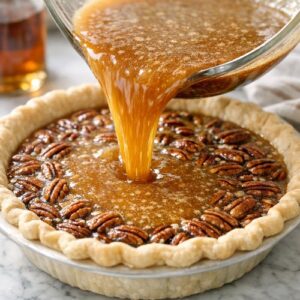
- Carefully pour your prepared filling mixture over the pecans, filling the shell completely but leaving about ¼ inch of space at the rim to prevent overflow. Place the pie on a baking sheet (for easier handling and to catch any drips) and transfer it to your preheated 375-degree oven. Bake for 35 to 45 minutes, watching carefully during the final minutes. The traditional endpoint is when the filling is set around the outer 2 inches but the center still jiggles slightly when you gently shake the pan—this is absolutely crucial. The center should look barely underdone; don't be tempted to bake longer. This requires faith in the process, but it's how you achieve the proper custard-like texture. The residual heat will continue cooking the center after you remove it from the oven.
- Remove the pie from the oven and place it on a wire cooling rack. Let it rest undisturbed for 10-15 minutes before serving, or allow it to cool completely (approximately 2 hours) for cleaner slices. The cooling phase is traditional for important reasons: it allows the filling to set completely, developing its silky texture. Cutting warm pie results in a runny, messy presentation, while a fully cooled pie cuts cleanly and beautifully.
FAQs
Can I make bourbon pecan pie without alcohol?
While you technically can substitute bourbon with vanilla extract, hot water, or coffee, you’ll lose the sophisticated depth that makes this pie special. The bourbon adds complexity that’s difficult to replicate. If avoiding alcohol for religious reasons or personal choice, I recommend using strong espresso powder (1 teaspoon) dissolved in a tablespoon of hot water, which adds similar depth and warmth. It’s not traditional, but it’s delicious and maintains the pie’s sophistication.
What’s the difference between light and dark corn syrup in this recipe?
Light corn syrup is refined and contributes pure sweetness and mild flavor. Dark corn syrup contains molasses, which adds caramel notes and deeper color. Using both is traditional because they balance each other—the light keeps things from being too heavy, while the dark adds complexity. If you only have one type, you can use the full amount of whichever you have (1 cup total), though the flavor profile will shift slightly. The result will still be delicious but different from the traditional version.
Can I prepare the filling the night before baking?
Yes! Mix your filling completely, cover it with plastic wrap, and refrigerate for up to 24 hours. In the morning, give it a quick whisk to recombine (sometimes the butter separates slightly), and proceed with the pie shell and baking. This is one of my favorite make-ahead strategies for entertaining—it reduces morning stress considerably.
Why does my pie sometimes separate or look curdled?
Separation usually indicates that hot butter was added directly to eggs (scrambling them) or that the filling overheated during mixing. Always use room-temperature eggs and slightly cooled butter. Alternatively, if your kitchen is very warm, chill all ingredients (eggs in their shells, even bowl and whisk) before beginning. A separated filling will still taste good but won’t have the silky texture that makes this pie special.
Is it okay to use store-bought pie crust?
Absolutely. While homemade crust is lovely, quality store-bought dough (thawed properly if frozen) creates delicious results. I’ve used Pillsbury and similar brands successfully. The key is respecting the instructions—thaw if frozen, prick the crust before baking, and follow the same baking protocol. The filling is where your care truly shines; don’t stress about the crust if store-bought serves your situation better.
More Recipes From This Tradition
- this simple cake – A seasonal celebration dessert with warming spices that pair beautifully with bourbon pecan pie as part of a dessert table.
- Pumpkin Scones – Perfect for serving alongside bourbon pecan pie at autumn brunches or Thanksgiving morning gatherings.
- this simple cake – Another elegant dessert that celebrates wholesome ingredients the way bourbon pecan pie honors pecans.
My grandmother’s greatest gift wasn’t just a recipe—it was teaching me that cooking is an act of presence. When you make bourbon pecan pie, you’re not just following instructions; you’re honoring generations of cooks who understood that food feeds both body and soul. You’re creating a moment people will remember, a flavor they’ll think about long after the meal ends.
This pie teaches patience, precision, and the power of quality ingredients. It shows you that simplicity, when executed with intention, becomes elegance. Whether this is your first bourbon pecan pie or your hundredth, approach it with my grandmother’s wisdom: respect the process, trust the tradition, and remember that the love you bring to your kitchen is the ingredient no recipe can measure.
Happy cooking!